

How many hours does your team spend chasing down information scattered across various systems, spreadsheets, and even physical files to answer a single customer query or process a claim? For many in the insurance industry, this isn’t just a hypothetical question; it’s a daily time sink. Imagine a customer calls regarding their policy, and to give them a comprehensive answer, your agent needs to check CRM for contact details, a legacy database for policy specifics, an underwriting system for premium history, and sometimes even a shared drive for scanned documents. Each system has its own interface, its own login, and often, its own quirks.
This fragmented data environment isn’t merely an inconvenience; it’s a significant drain on resources and a silent killer of customer satisfaction. The time spent navigating disconnected systems means longer call times, increased operational costs, and frustrated employees. More importantly, it leads to errors. When information has to be manually transcribed or cross-referenced, the chance of human error skyrockets, potentially resulting in incorrect quotes, mishandled claims, or compliance issues. This creates a ripple effect: higher rework rates, increased training costs for agents struggling with multiple platforms, and ultimately, a damaged reputation for efficiency and reliability.
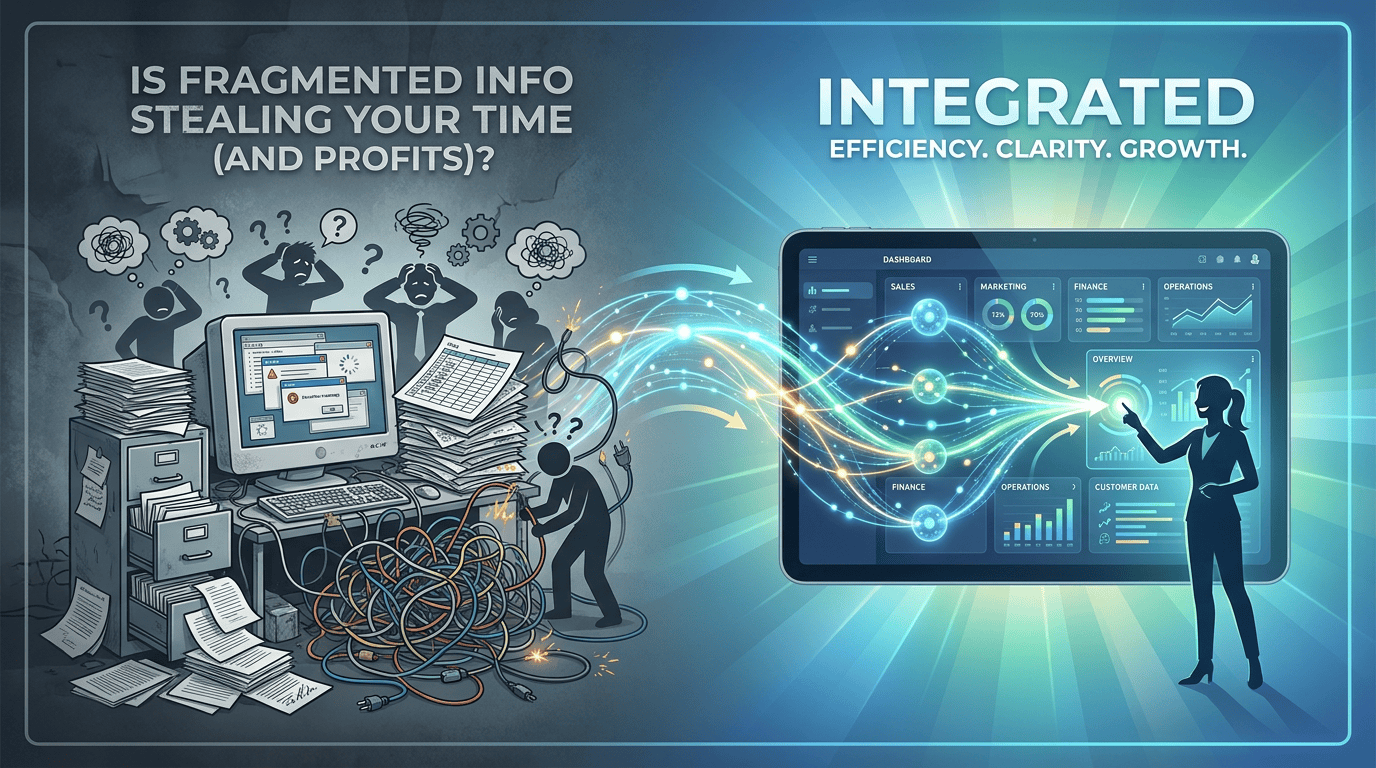
The root cause often lies in a piecemeal technology adoption history – new systems added over time without a cohesive strategy for integration. Each new solution solves one problem but inadvertently creates another by adding to the data siloing. For insurers, especially those serving small to mid-sized markets or operating in regions like the Caribbean, the cost of this inefficiency is magnified, directly impacting profitability and their ability to compete effectively. It prevents a unified view of the customer, making personalized service and proactive outreach nearly impossible, and delaying critical business insights from comprehensive data analysis.
The good news is you don’t need to rip and replace everything to solve this. A practical first step is to identify two or three key systems that are frequently accessed together for common workflows, such as claims processing or policy renewals. Begin by developing an integration layer – essentially, a bridge – that allows these systems to talk to each other. This could involve creating custom Application Programming Interfaces (APIs) or using middleware to pull relevant data into a single, unified view for your agents. Even a simple, secure portal that aggregates read-only data from disparate sources can dramatically cut down on search times and improve accuracy. Start with a small pilot project for a specific department or workflow to demonstrate tangible benefits, then expand.
By focusing on targeted integrations, you can achieve significant gains in efficiency, accuracy, and customer service without a massive upfront investment. This approach reduces manual effort, minimizes errors, and empowers your staff with the right information at their fingertips. What small step can you take this week to connect two of your most used systems? We’d be happy to discuss how a tailored integration strategy could work for your business. Schedule a conversation today: https://www.baileysenterprisesoftwaresolutions.com/contact/.