

A customer calls about a transfer that hasn’t appeared. The payment team searches yesterday’s spreadsheet, finance checks a separate report, and someone forwards another email. Nobody can say who owns the investigation. For smaller banks, payment reconciliation exceptions can become an invisible queue between departments. These are transactions that don’t match expected records and need investigation, not necessarily missing money. When ownership lives in inboxes, an ordinary mismatch can trigger repeated checks, delayed answers, and unnecessary escalation. The overlooked problem isn’t always the payment platform. It’s the absence of one controlled place to assign, track, and close each unresolved item.
That gap often starts with perfectly understandable workarounds. One department exports a settlement file, another keeps investigation notes, and branch staff request updates separately. Different transaction references or processing dates can complicate matching. Without a shared case record, colleagues may investigate the same item twice while another waits untouched. The Basel Committee’s operational risk principles emphasize strong internal controls, including account reconciliation. They aren’t Caribbean specific requirements, but they provide a useful control benchmark. For a Caribbean bank’s operations manager, the practical question is simple: can someone identify every open exception, its owner, its age, and the next required action?
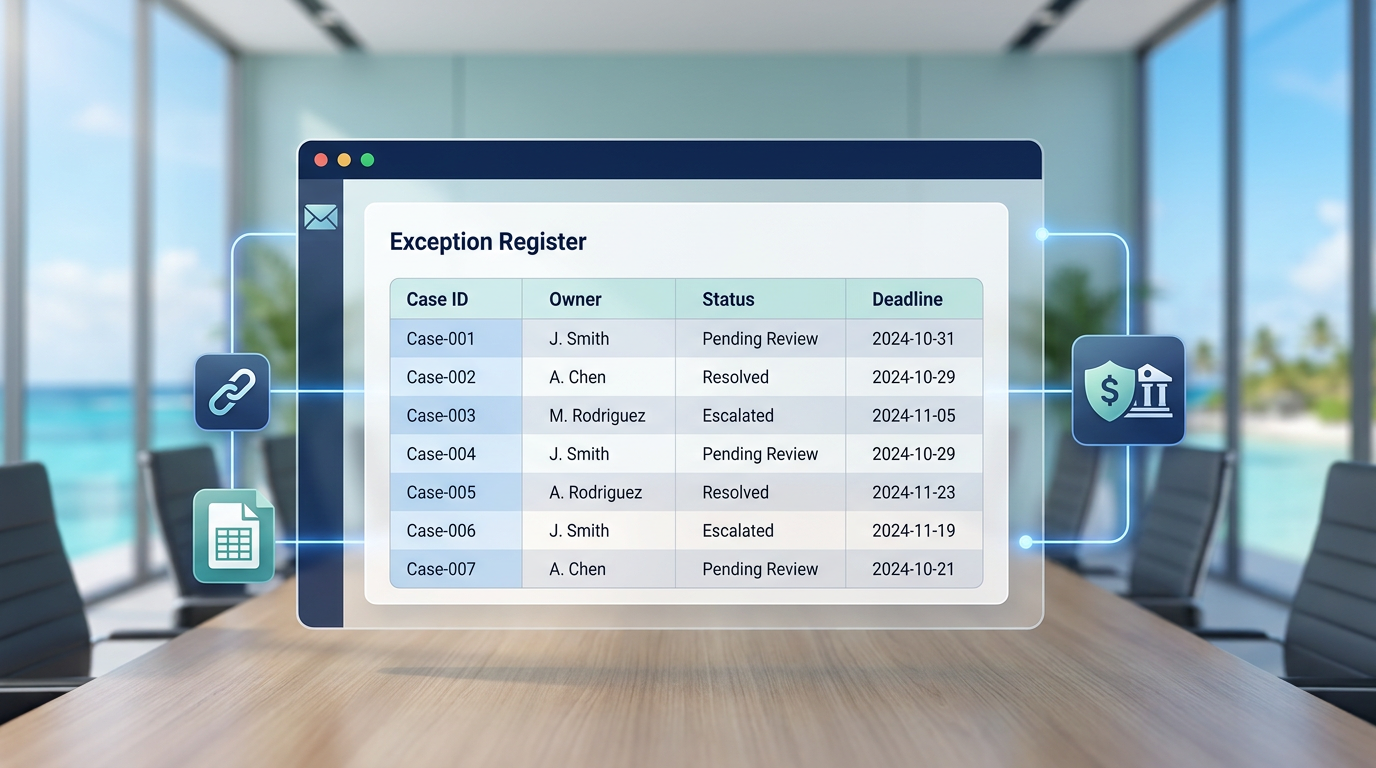
Start with one payment stream and create a controlled exception register inside an approved system. Give every case a unique identifier, payment reference, amount, currency, processing date, reason, owner, deadline, and status. Agree which team accepts each exception and when overdue cases move to a supervisor. Record investigation notes and supporting evidence alongside the case rather than scattering them across attachments. Require an authorized reviewer to approve closure, with an explanation of the resolution. Limit access by role, retain an audit trail, and keep unnecessary customer information out of the register. Visibility should improve accountability without creating another sensitive database.
Once the workflow works, connect it to existing business systems through approved exports or documented interfaces. Automated matching can propose straightforward matches while uncertain items stay with staff for review. Don’t let a new tool post adjustments or release payments without established authorization. Begin with a daily view of unresolved cases, grouped by age and owner. Bailey’s Enterprise Software Solutions can support this process improvement through custom internal tools and secure interfaces tailored to existing operations. An integrated register can make routine investigations more efficient without requiring an immediate replacement of the core banking platform or changing payment approval responsibilities.
If you’re not ready for a technology project, review one week’s unresolved items with payment operations, finance, and a branch representative. Count cases without owners, measure their age, and note how often staff request the same information. Then agree on one owner and one next action for each case. Pilot the register using your bank’s approved tools and retention rules. Compare unresolved case age and repeated enquiries before expanding. That small exercise gives management evidence for deciding whether further automation is worthwhile. If you’d like help planning a manageable first step, schedule a conversation with Bailey’s Enterprise Software Solutions here.


