
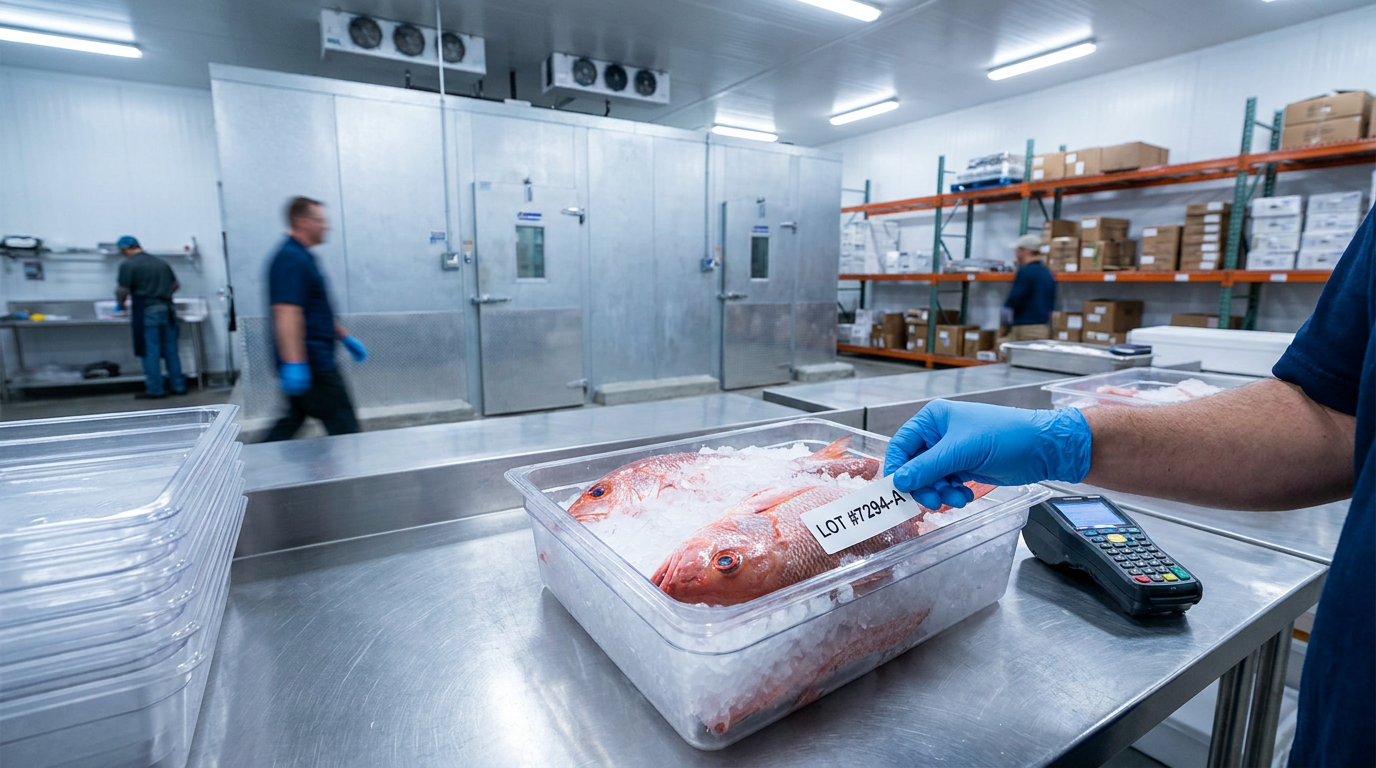
A hotel calls about yesterday’s fish delivery, but your team can’t tell which landing supplied it. The fish arrived together, was divided into smaller orders, and left with invoices that recorded species and weight but no batch reference. For small seafood wholesalers supplying Caribbean restaurants and hotels, seafood lot tracking can break at this ordinary handoff. The problem isn’t necessarily missing paperwork. It’s paperwork that doesn’t connect. When a customer raises a quality concern, employees must reconstruct the journey from memory, messages, and handwritten notes, while customers wait for an answer and managers wonder how much stock is actually involved.
The weak point is often splitting a delivery. One supplier’s consignment becomes several storage containers, then several customer orders. If its identifier doesn’t travel with those changes, an otherwise useful receiving record becomes a dead end. The US FDA’s food traceability guidance explains how traceability lot codes connect food with associated records. That’s a useful operating principle, not a statement that American requirements apply to every Caribbean business. Without that connection, a wholesaler may hold more stock than necessary, spend hours checking deliveries, or struggle to give a buyer a clear answer about a particular order when questions arise later.
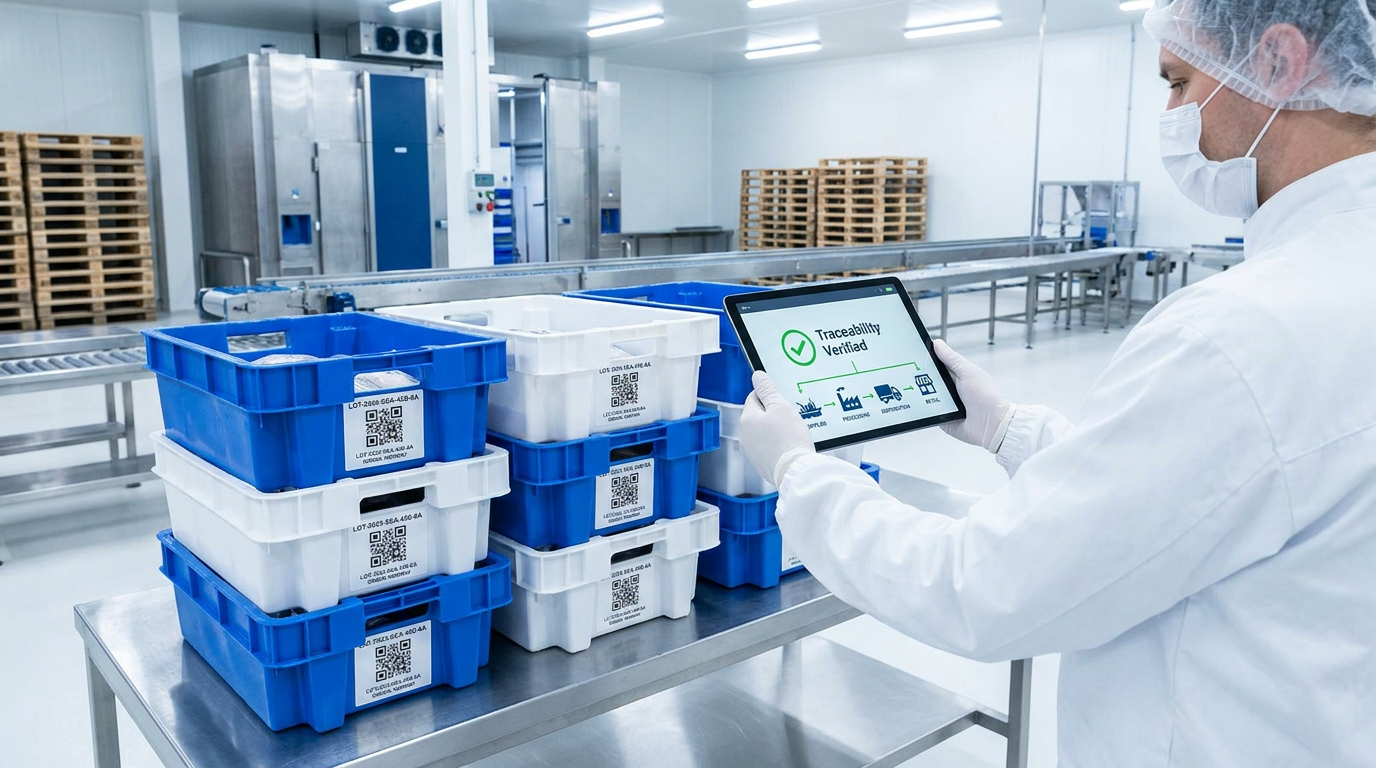
Start with one receiving point and one product line. Assign each incoming lot a unique reference, then record the supplier, receipt date, species, quantity, and supplier’s own lot reference when available. Label every container created from that lot. At dispatch, record which lot supplied each invoice line and how much left. If an order uses two lots, preserve both references rather than replacing them with a single convenient code. Agree who enters each detail and who checks it. Keep the process short enough for busy staff to follow during unloading, not just during a quiet office demonstration with management watching.
You don’t need a full technology project to test this workflow. Tomorrow, use numbered labels and a shared spreadsheet for one delivery, with access limited to the people responsible. Before closing, choose one dispatched order and trace it back to its supplier; then identify every other customer who received that lot. Note missing links and the time needed to answer. Repeat for a week. This small exercise reveals whether the difficulty is inconsistent labeling, missing dispatch details, or duplicate entry. Fix that specific gap before buying scanners or asking staff to maintain another system alongside the existing paperwork each day.
Once the routine works, custom internal tools can make it easier to maintain. Bailey’s Enterprise Software Solutions can build a tailored receiving and dispatch application, with secure access and integrated interfaces connecting existing business systems where practical. An automated lookup can then retrieve linked receipts and customer deliveries instead of making staff search separate files. Keep the design scalable, but measure process improvement simply: can your team identify the affected deliveries accurately, without interrupting everyone else’s operations? Better productivity starts with links, not extra screens. If you’d like help connecting those records, schedule a conversation with Bailey’s Enterprise Software Solutions.


