
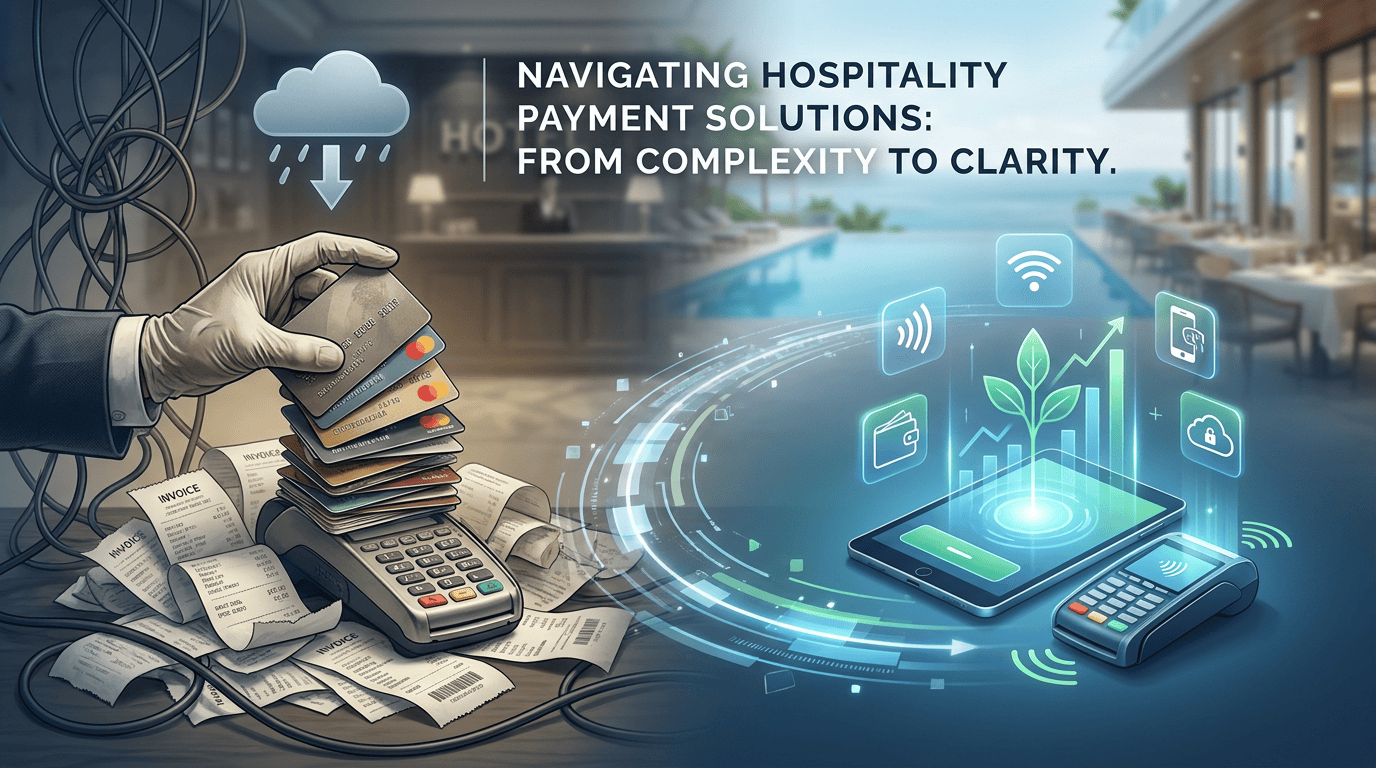
Ever felt like you’re running a five-star operation, but your payment processing feels stuck in the last century? For many small and mid-sized tourism businesses, particularly those operating across the Caribbean, the answer is a resounding ‘yes.’ You offer beautiful experiences, immaculate rooms, and unforgettable excursions, yet when it comes to taking money, you’re juggling multiple systems, dealing with manual chargeback disputes, or worse, losing bookings because your online payment options are clunky or unreliable. This isn’t just an inconvenience; it’s a silent drain on your time, revenue, and customer trust.
The problem often stems from a patchwork approach to payment technology. Perhaps you started with one provider for your website, another for point-of-sale, and yet another for international bookings. These systems rarely talk to each other seamlessly. Staff spend valuable hours manually reconciling transactions, attempting to match bookings to payments, and chasing down discrepancies. This creates a ripple effect: errors increase, customer service suffers due to payment-related delays, and your accounting team is buried in reconciliations instead of focusing on strategic financial analysis. In the Caribbean, this is exacerbated by currency exchange complexities and the need to cater to diverse international payment preferences, from credit cards to local bank transfers, often without a unified, secure solution.

The true cost goes beyond staff hours. Inconsistent payment processing leads to higher chargeback rates, as customers may dispute transactions they don’t recognize or can’t easily track. A recent survey (while not specific to the Caribbean, the principles hold true globally) indicated that businesses with fragmented payment systems experience significantly higher fraud risks and reconciliation costs compared to those with integrated solutions. For a small tour operator or boutique hotel, every hour spent on payment administration is an hour not spent improving guest experiences or strategizing growth. And when a potential customer abandons a booking because the payment gateway was slow or unfamiliar, that’s direct revenue lost without a trace.
The good news is you don’t need a massive overhaul overnight. Start by auditing your current payment landscape. Document every payment method you accept, every processing system you use, and the flow of funds from customer to your bank account. Where are the manual steps? Where are the bottlenecks? Identify the top three pain points. Then, research integrated payment gateways that can consolidate these processes. Even if you’re not ready for a full system migration, understanding your current state enables you to ask targeted questions about automation capabilities, security features like PCI compliance, and how well a new system can integrate with your existing booking or accounting software. Look for solutions that offer robust reporting and automated reconciliation features. Sometimes, simply centralizing customer payment data in a secure, accessible format can be a significant first step.
Imagine a world where payments flow smoothly, reconciliation is automated, and your team can focus on what they do best: creating exceptional experiences for your guests. It’s not a distant dream. Let’s talk about connecting your systems and streamlining your financial operations. Schedule a chat at https://www.baileysenterprisesoftwaresolutions.com/contact/ to explore practical, immediate steps.