
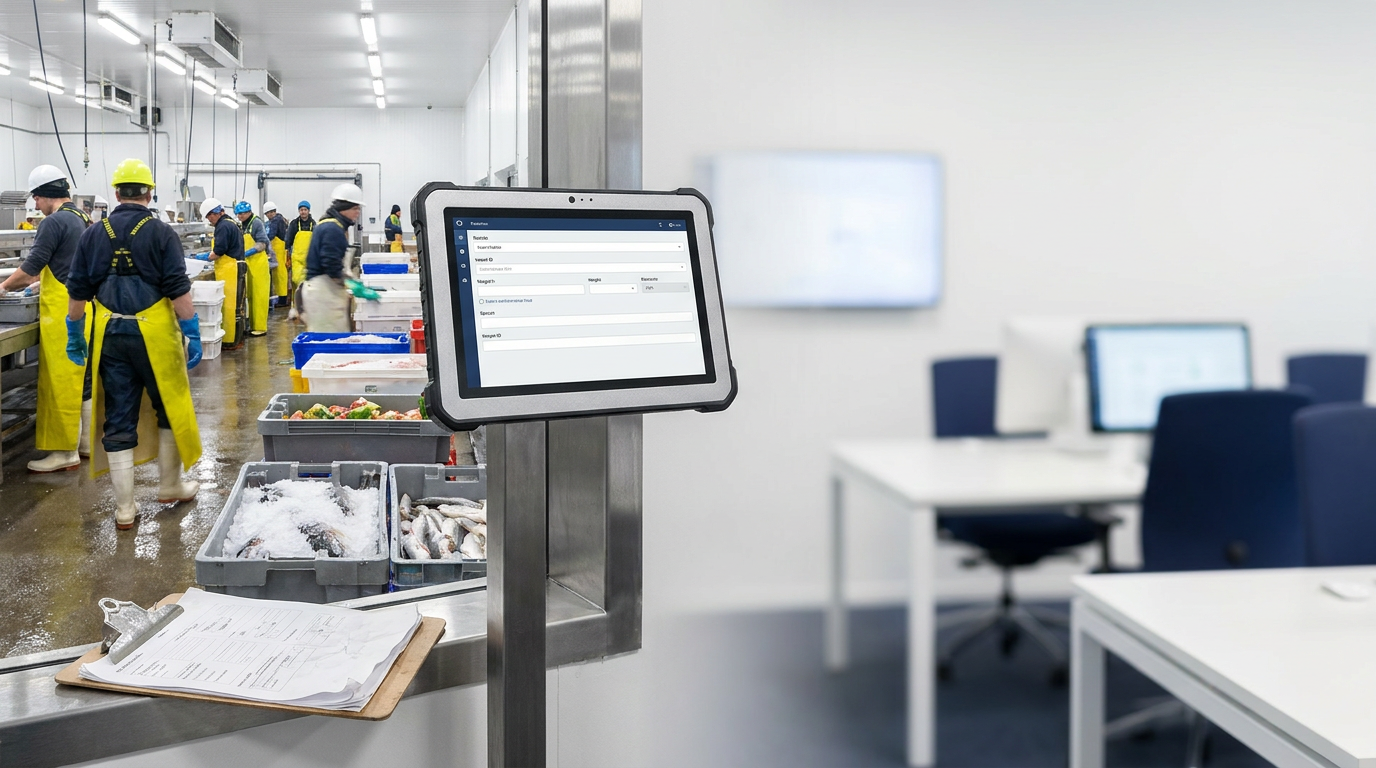
When fresh fish or harvested produce arrives at the processing floor, a handwritten batch slip typically accompanies each crate. The dock team jots down weights, vessel identifiers, harvest dates, and storage temperatures on paper clipboards. By the time office staff manually key these sheets into accounting systems hours later, errors have crept into the record. This breakdown in fresh catch traceability creates serious operational headaches for food distributors, processing plants, and fisheries across the region. When cold-storage records and weight logs rely on fragmented physical paperwork, verifying provenance becomes an exhausting manual exercise that drains staff productivity.
This recording gap happens because production docks operate in fast, wet environments where standard computers cannot survive. Workers naturally turn to physical logbooks to maintain speed during offloading. However, delayed data entry costs regional agribusinesses substantial revenue through unbilled weight variances, product spoilage, and failed compliance audits from overseas buyers. If a client questions a delivery or an export inspector asks for cold-chain documentation, employees must dig through filing boxes to reconcile conflicting timestamps. Inaccurate lot tracking leads to wasted stock, delayed customer invoicing, and administrative burnout across operations teams trying to balance mismatched inventory counts.
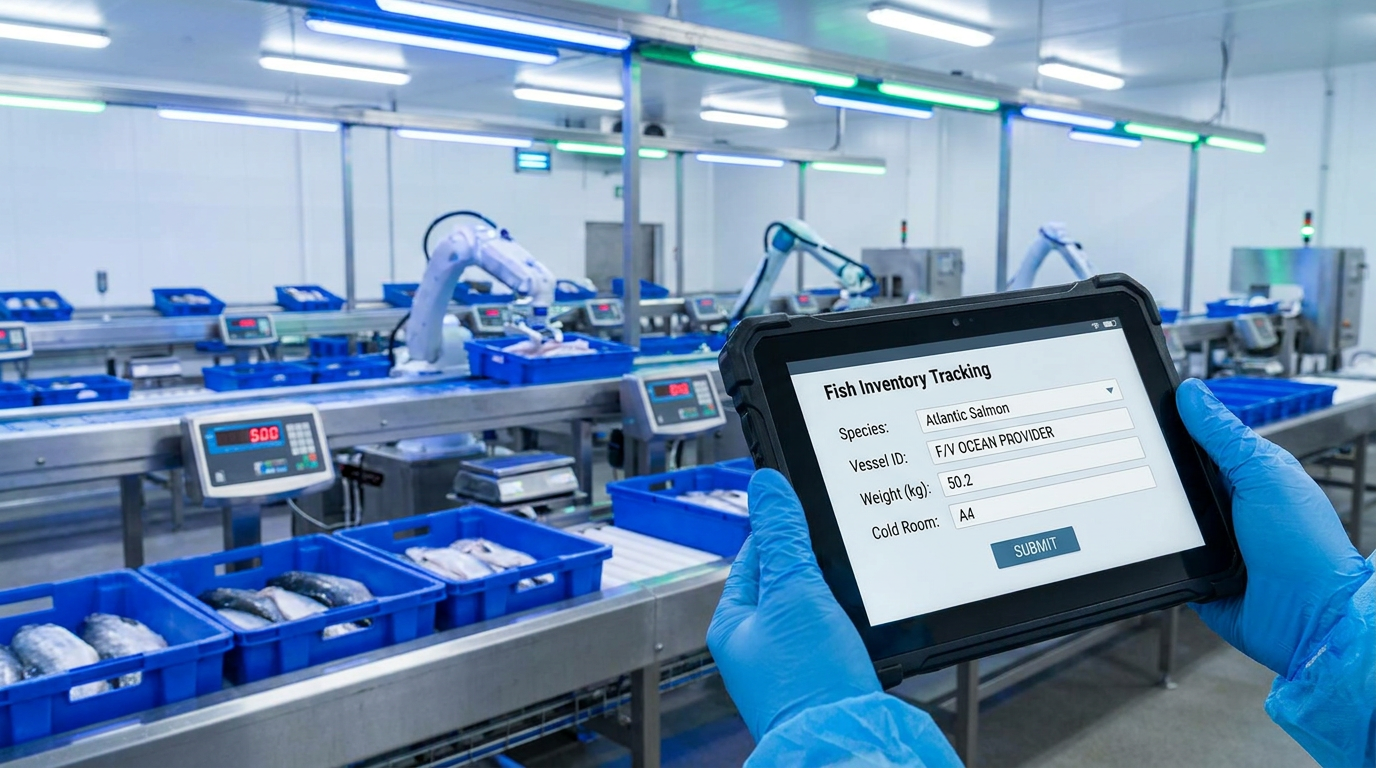
Solving this operational bottleneck does not require replacing your entire facility or buying expensive specialized machinery. The practical remedy starts with practical business process automation using rugged, low-cost mobile tablets equipped with tailored digital intake forms. Instead of scribbling on paper, receiving dock staff tap simple buttons to record species, vessel license numbers, gross weights, and cold-room assignments instantly. Custom internal tools built for mobile browsers allow offline data capture when Wi-Fi drops on the pier, synchronizing records automatically once connectivity returns.
Your business can begin right now without building a full technology project immediately. Start by standardizing your physical intake sheet into four core mandatory fields: lot identifier, source vessel or farm plot, arrival temperature, and verified scale weight. Require receiving staff to write these down in a fixed order for one week to eliminate ambiguity. Once your team masters this standard data collection habit, transitioning to no-code application development or secure custom web applications becomes effortless, ensuring dockside entries flow directly into your core invoicing databases without manual rekeying.
Building reliable, connected operations protects your margins and gives commercial clients complete confidence in every crate shipped. Bailey’s Enterprise Software Solutions develops custom software development projects, API integration services, and automated workflow solutions that help Caribbean agribusinesses streamline daily logging, eliminate paperwork errors, and safeguard regulatory compliance. Whether you need an offline-ready mobile dock app or an automated reporting system connecting scale data to accounting platforms, we engineer stable tools tailored to your operational realities. Schedule a conversation with our engineering team today at https://www.baileysenterprisesoftwaresolutions.com/contact/ to discuss modernizing your workflow.