
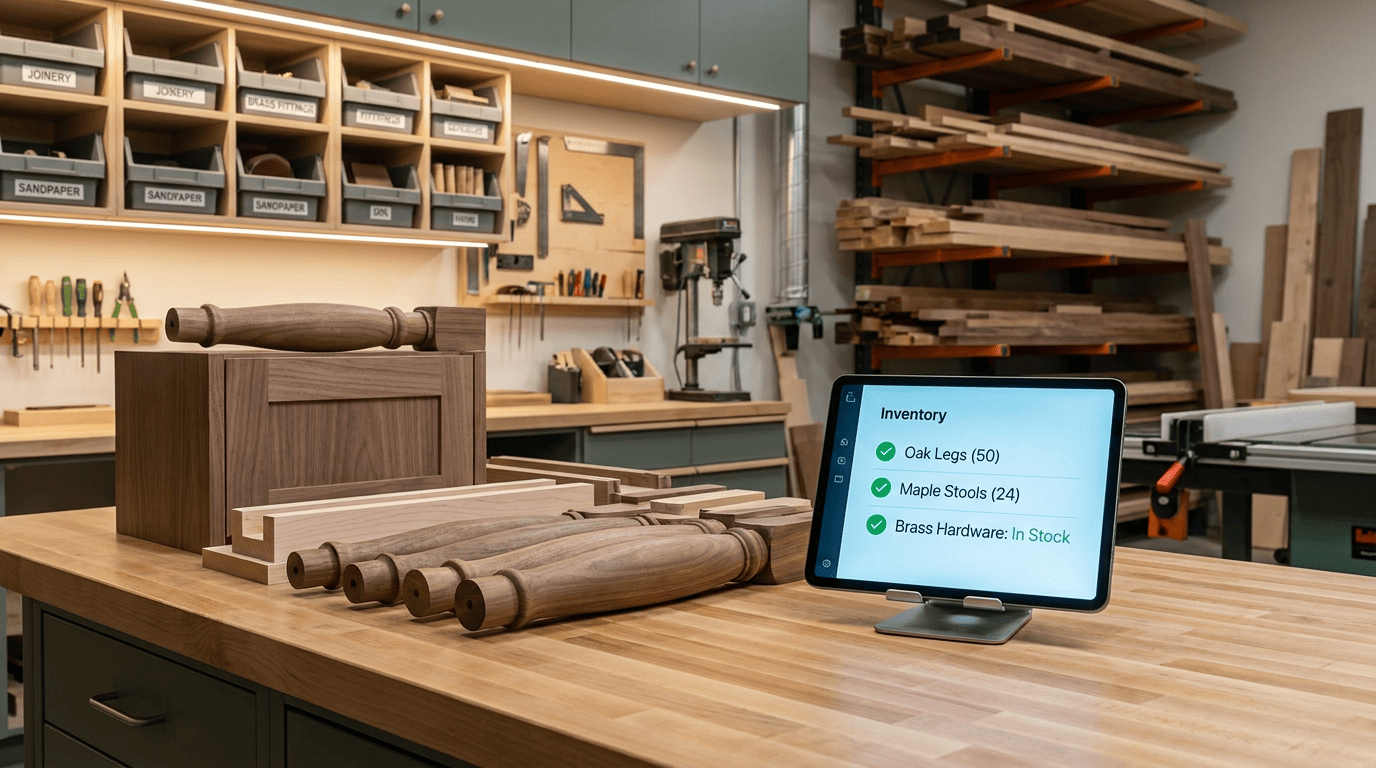
A batch of custom wooden furniture or artisanal goods sits ready for final assembly, yet everything halts because nobody knows if the matching brass hardware actually arrived. This scenario happens every week in small workshops, where teams discover late that vital components never made it into the workshop. Disconnected tracking makes it difficult to maintain steady progress when staff must manually check shelves instead of relying on verified logs. When physical inventory counts do not match what purchasing agents see on paper, production schedules collapse. Workers waste valuable working hours searching through disorganized storage bins, and managers end up paying expedited courier rates for replacement materials that were already sitting overlooked in receiving.
The problem stems from fragmented inventory tracking across receiving, production, and order intake. Most craft producers rely on whiteboards, scattered clipboards, or single-user desktop spreadsheets that get updated only days after materials arrive. When raw supplies arrive at the loading bay, team members frequently grab pieces immediately for rush orders without updating the central spreadsheet. Because these manual updates happen inconsistently, administrative records drift further away from physical floor counts with each passing week. This constant stock discrepancy leads directly to misquoted lead times, delayed deliveries, and frustrated wholesale clients who take their recurring business elsewhere when agreed delivery targets slip.
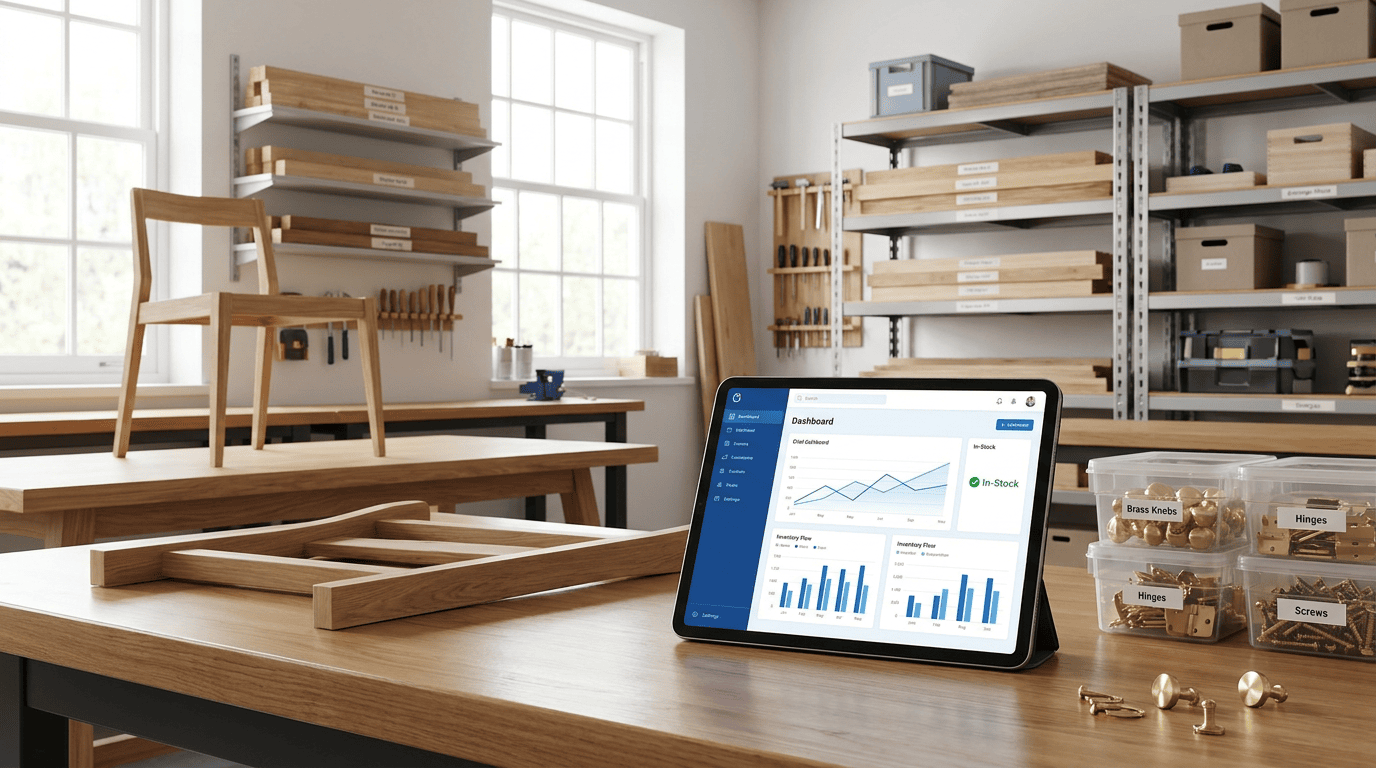
Resolving this issue requires linking physical stock movements directly to centralized order intake through straightforward business process automation. Light manufacturing workshops can implement accessible digital intake logs using barcoding or digital tags handled directly through mobile workshop devices. When a worker receives a crate of raw supplies, scanning the shipment immediately reconciles the purchase order and marks components available for specific project bills of materials. This direct connection ensures everyone from the workshop bench to the sales desk sees identical material counts simultaneously. It completely eliminates guesswork, minimizes costly double-ordering mistakes, and allows production supervisors to schedule high-value assembly shifts with complete confidence.
You do not need a multi-month technology rollout to start fixing your supply discrepancies. Begin by conducting a thorough audit of your five most critical raw components, such as custom fasteners, specialty glazes, or precision brackets. Group these items into labeled physical intake bins and mandate a simple sign-out log whenever an artisan removes pieces for assembly. Once your team establishes this physical baseline routine, moving to modern custom internal tools becomes a painless step. Adopting lightweight digital forms or no-code application development platforms allows staff to record material allocations from any tablet or mobile phone, providing management with accurate inventory visibility without disrupting regular artisan workflows.
Taking full control of your material allocation protects hard-earned operating margins, prevents production bottlenecks, and keeps customer delivery promises intact. When you are ready to connect workshop inventory records to your quoting and order systems through secure custom software development, we can help build reliable business systems tailored directly to your team’s everyday routine. Schedule a conversation through https://www.baileysenterprisesoftwaresolutions.com/contact/ to discuss practical process improvement strategies for your operations.


