
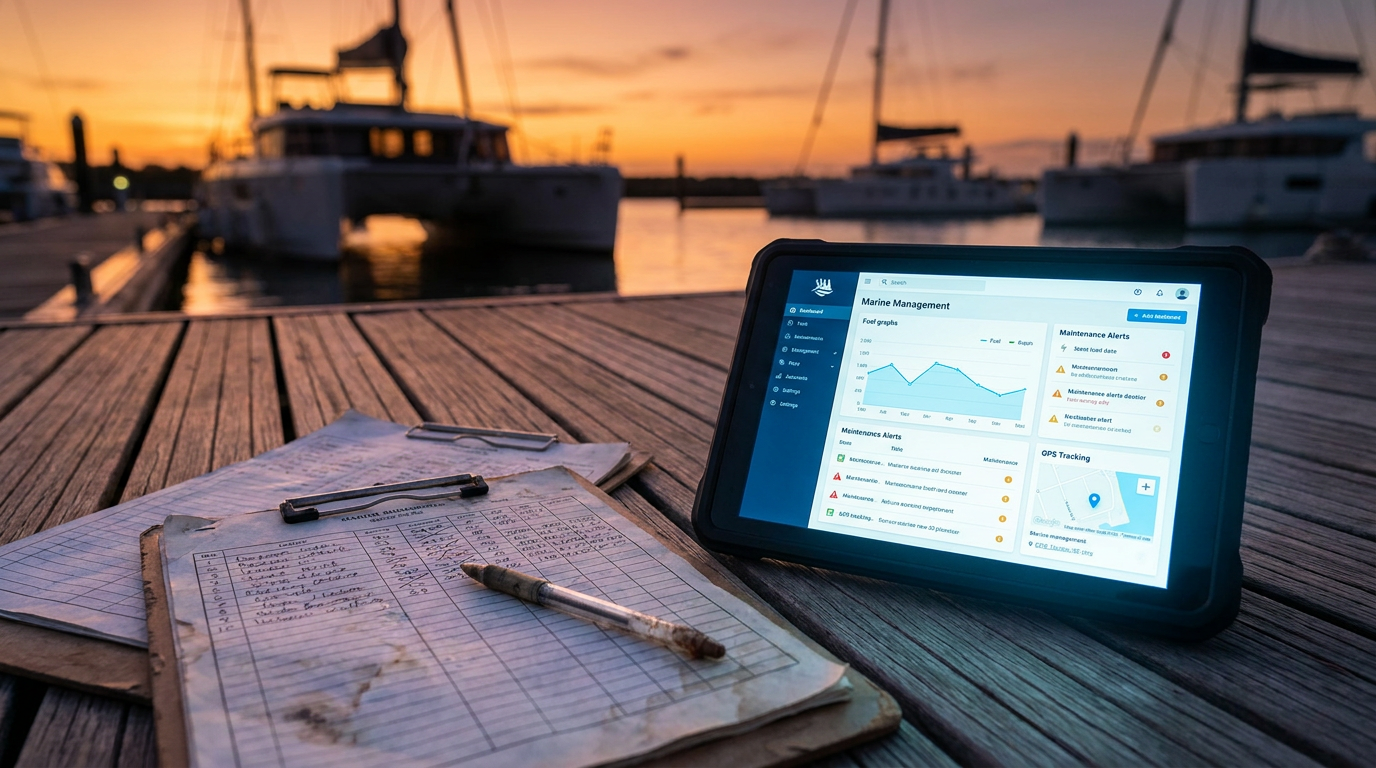
A charter catamaran docks after sunset, and the captain hands over a soggy clipboard filled with handwritten fuel consumption logs, passenger headcounts, and engine hours. Your dockmaster stacks the sheet alongside five others, planning to reconcile them tomorrow morning before the provisioning crew arrives. By midday, someone misreads a smudged numeral, leading to a missed routine impeller change that leaves a vessel stranded during peak charter hours. Marina and marine excursion operators across our islands deal with dock slip booking and vessel maintenance tracking delays every single week. When critical vessel hours, turnaround checklists, and slip allocations live on physical paper or isolated messaging apps, operational visibility completely vanishes.
This breakdown happens because frontline marine crews operate in wet, dynamic environments where desktop computers cannot go, while shore staff remain tied to back-office bookkeeping programs. The disconnect produces costly consequences that ripple across the entire operation. Maintenance schedules get delayed because run hours are entered days late, causing preventable mechanical failures that disrupt high-value bookings. Invoicing for shore power, pump-outs, and extra dockage gets missed because dockmasters forget to transcribe handwritten log entries into accounting systems. Manual re-entry wastes hours of administrative time and creates billing disputes with yacht captains who expect transparent documentation. For growing marine tourism businesses, unrecorded dock fees and unscheduled engine repairs steadily erode operating margins.
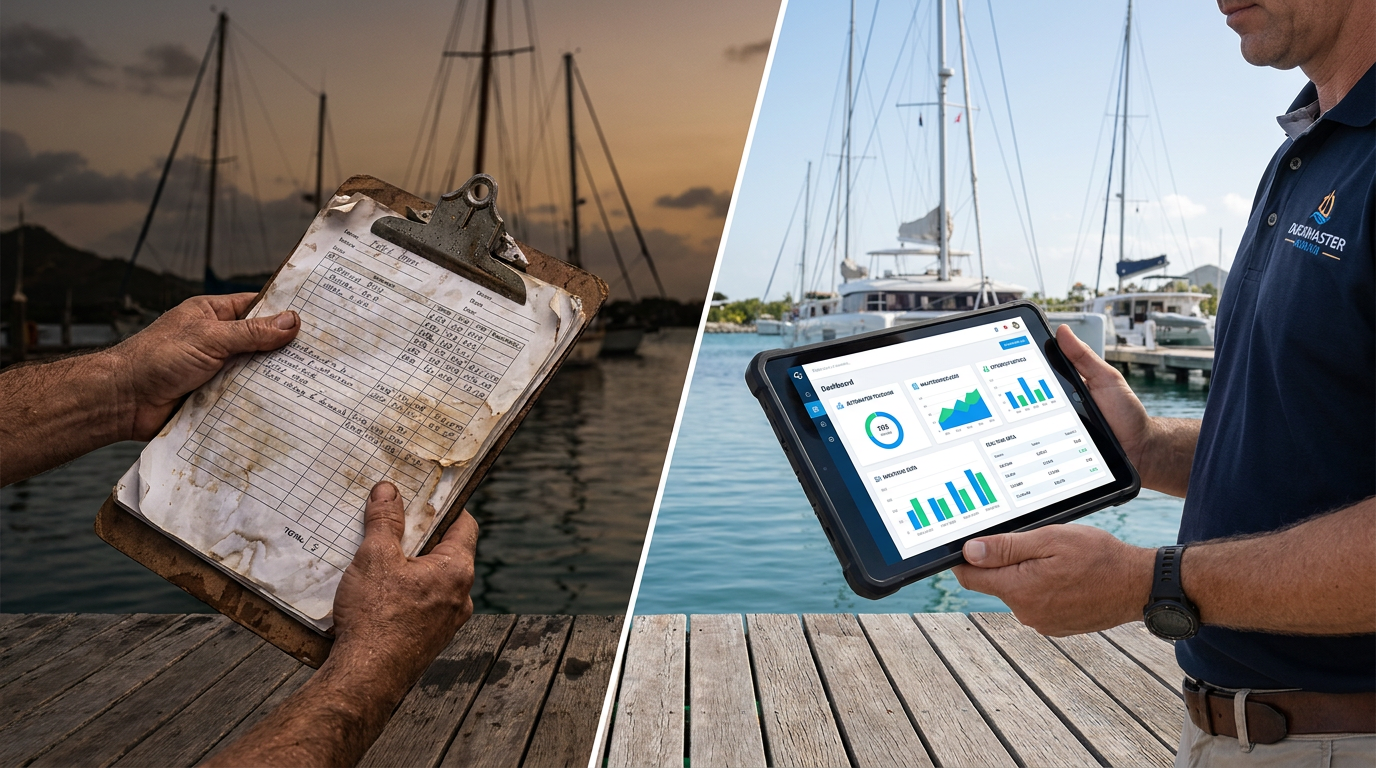
Solving this issue does not require ripping out your accounting platform or spending massive capital on rigid corporate enterprise suites. The practical remedy starts by centralizing field intake into responsive digital checklists that dock crews can update on mobile devices right at the pier. When a captain finishes a charter, submitting engine hours, fluid levels, and guest tallies takes thirty seconds on a durable tablet or phone. That intake data flows instantly into an integrated operations dashboard, updating maintenance counters and alerting mechanics when service intervals approach. Dock assistants record slip arrivals and metered services electronically, ensuring every payable service attaches immediately to the correct client profile without duplicate data entry.
Your team can begin this process today without writing code or buying complex software. First, audit your physical vessel turnaround sheet and dock slips to identify the five data points that cause the most billing mistakes or maintenance delays. Create a standard digital form using tools your staff already carry on their smartphones, establishing clear drop-down fields for vessel names, hour meters, and maintenance flags. Once shore staff and boat captains grow comfortable submitting records digitally, you can connect those inputs directly to your primary schedules, booking engines, and billing records to eliminate manual transcriptions completely.
Bailey’s Enterprise Software Solutions helps marine operators implement custom internal tools, web application development, and secure workflow automation for Caribbean businesses that connect waterfront teams directly to administrative systems. Our structured development process ensures your field data links smoothly with central financial records, protecting operational integrity while eliminating administrative overhead. If you want to replace fragile paper logs with dependable digital workflows that protect your fleet and streamline dockside billing, schedule a conversation through https://www.baileysenterprisesoftwaresolutions.com/contact/.


